Reducing Hospital Readmissions: How In-Home Support Fits Into a Safe Discharge Plan
For hospital discharge planners, home health agencies, and geriatric care managers, readmission rates aren't just a quality metric — they're a daily operational reality, tied directly to reimbursement, patient outcomes, and institutional performance.
The days immediately following discharge are consistently the highest-risk window for a patient to end up back in the hospital, and much of that risk comes down to one factor: what kind of support is actually in place once the patient walks out the door.
In-home care, when coordinated well, can be one of the most effective tools for closing that gap. Here's how it fits into a safer, more sustainable discharge plan.
Why the First 72 Hours (and Beyond) Matter So Much
The period right after discharge is when patients are often at their most vulnerable — managing new medications, adjusting to changed mobility, and trying to follow discharge instructions without the structure of a hospital setting around them. Missed medications, unaddressed mobility risks, and delayed recognition of complications are among the most common reasons patients end up readmitted within 30 days.
A discharge plan on paper doesn't account for what happens if no one is there to notice a patient struggling to get out of bed safely, or forgetting a medication dose by day three. That's the gap in-home support is built to fill.
Coordinating Home Support Immediately Post-Discharge
The value of in-home care drops significantly the longer there's a gap between discharge and the start of support.
Ideally, coordination begins before the patient ever leaves the hospital, not after:
- Pre-discharge assessment. Involving a home care provider in discharge planning discussions allows care needs to be identified before the patient goes home, rather than reacted to after a problem arises.
- Same-day or next-day start. Whenever possible, care should begin immediately upon discharge — not days later once a family has had time to "see how things go" on their own.
- Clear communication of the care plan. Discharge instructions, medication schedules, and any mobility or wound care needs should be handed off directly to the in-home care team, not filtered secondhand through family members.
- A single point of contact. Discharge planners and home health agencies benefit from having one reliable contact at the home care agency, rather than navigating multiple layers of communication during a time-sensitive handoff.
When this coordination happens smoothly, it removes much of the uncertainty that leads families to default to reactive care — waiting for a fall or a missed medication before calling for help.
Advanced Personal Care for Complex Post-Hospital Needs
Not every discharge involves the same level of complexity, and patients with more involved medical histories need more than basic companion care.
Advanced Personal Care is designed specifically for patients navigating complex post-hospital recovery, including:
- Medication management and adherence support for multi-drug regimens
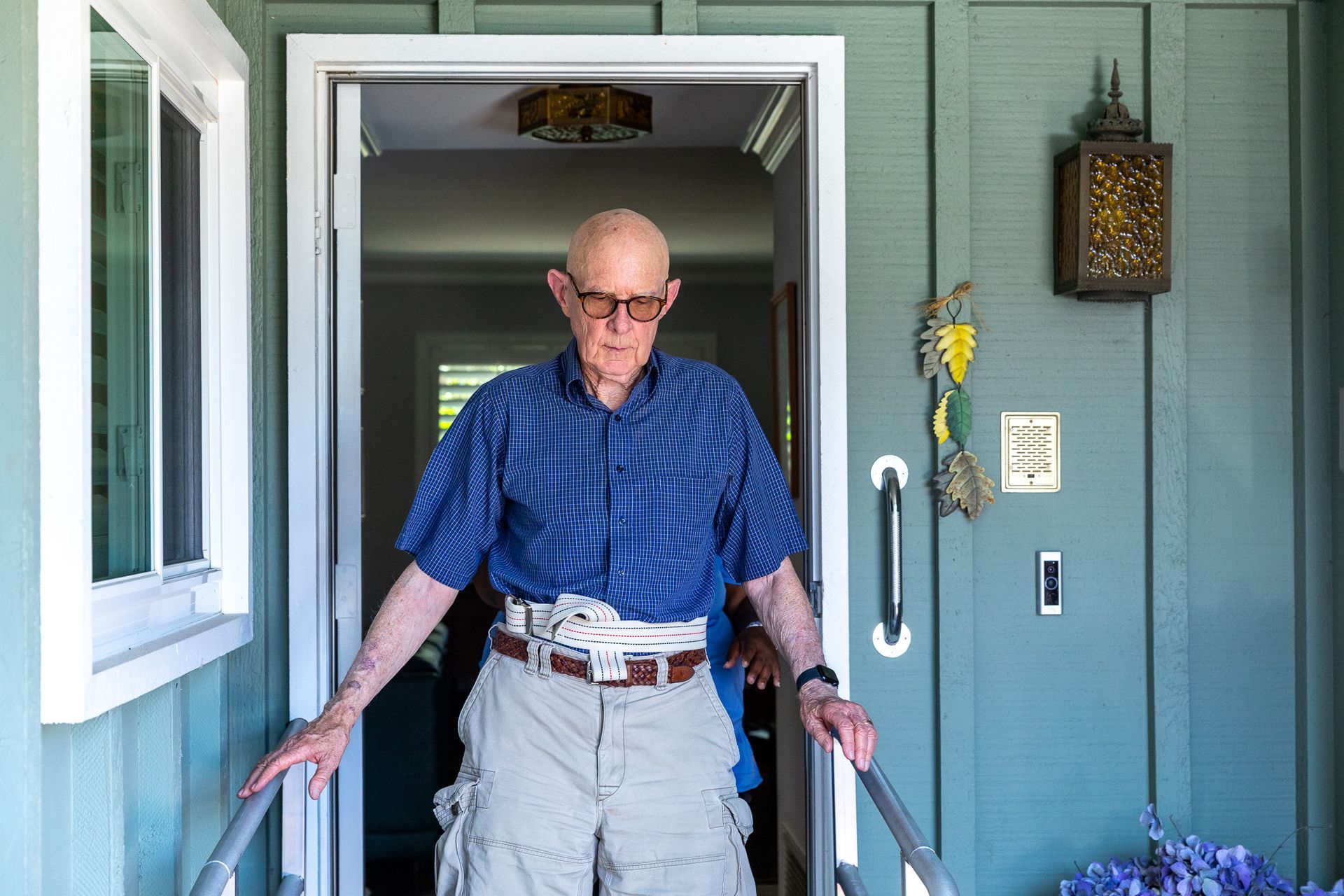
- Mobility assistance for patients recovering from surgery, stroke, or significant deconditioning
- Wound care coordination alongside home health nursing visits
- Support for patients managing chronic conditions alongside an acute recovery, such as diabetes or COPD
- Close observation for early warning signs that might otherwise go unnoticed until they become emergencies
For discharge planners working with patients who have multiple comorbidities or a complicated hospital stay, Advanced Personal Care provides a level of support that goes beyond what standard non-medical home care typically covers — without requiring a skilled nursing facility placement.
24/7 Availability as a Safety Net During Peak Risk
Readmission risk doesn't operate on a 9-to-5 schedule, and neither should the support meant to prevent it. Round-the-clock availability matters most during exactly the window when patients are least equipped to manage on their own:
- Overnight coverage during the highest-risk recovery period, when falls, medication errors, and unaddressed symptoms are most likely to go unnoticed until morning
- Rapid response capability if a family caregiver needs backup support on short notice
- Consistent caregiver presence that allows early signs of decline (confusion, pain, appetite changes) to be caught and reported before they become a 911 call
- A safety net for families who may be managing their own jobs, health, or other responsibilities and can't provide continuous supervision themselves
For hospital-based referral partners, this kind of availability isn't a convenience — it's often the deciding factor in whether a discharge plan holds up in the real world or collapses within the first week.
What This Means for Referral Partners
Discharge planners and geriatric care managers are ultimately trying to answer one question for every patient: is this discharge plan actually going to hold? A coordinated, well-timed home care partnership — one that starts immediately, scales to Advanced Personal Care when needed, and includes 24/7 availability — directly strengthens the odds that it will.
Assistance In Home Care has spent more than two decades building exactly this kind of partnership with hospitals, home health agencies, and care managers across the region, with a focus on complex cases and long-term caregiver continuity. If you're building a discharge plan for a patient with significant post-hospital needs, we're available to coordinate care before discharge day arrives — not after.