Why Continuity of Care Matters More Than Families May Realize
When families begin searching for in-home care, they often focus on practical questions: How many hours of care are needed? What services are included? Is the caregiver experienced?
While these are all important considerations, one factor has an even greater impact on a client's long-term well-being: continuity of care.
Seeing the same familiar caregivers over time creates consistency, trust, and stability that simply can't be replicated with a revolving door of new faces. For seniors, their families, and even healthcare professionals making referrals, continuity of care often leads to better experiences and better outcomes.
Care Is About More Than Completing Tasks
Professional caregivers do much more than assist with daily activities. Over time, they learn a client's routines, preferences, personality, and subtle changes in health that someone new might easily overlook.
A caregiver who has worked with a client for months understands things like:
- How they like their daily routine structured
- Their preferred meals and activities
- Small changes in mobility or balance
- Changes in mood, memory, or appetite
- The communication style that helps them feel comfortable
This familiarity allows care to become more personalized, creating a level of comfort that's difficult to achieve when caregivers change frequently.
Familiar Faces Reduce Stress
Adjusting to in-home care is a significant transition for many older adults. Building trust takes time, especially for individuals living with dementia, recovering from surgery, or managing chronic health conditions.
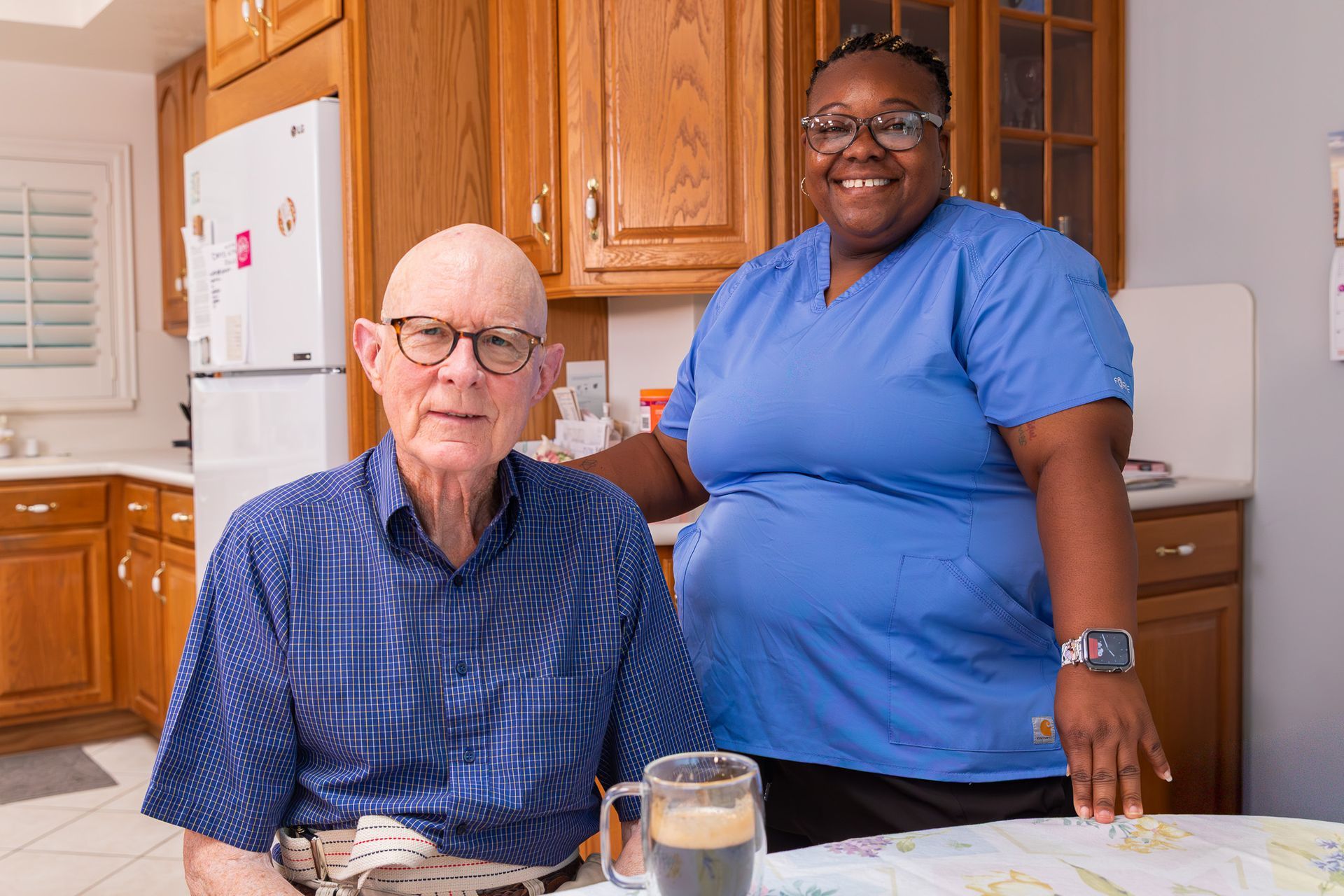
Consistent caregivers help reduce anxiety because clients know who is walking through the door each day. They don't have to repeatedly explain routines or become acquainted with someone new every week.
Families benefit as well. Instead of wondering whether a new caregiver understands their loved one's needs, they gain confidence knowing someone familiar is providing care. That peace of mind can make a meaningful difference during what is often an emotionally challenging time.
Better Communication Leads to Better Outcomes
Continuity of care also improves communication between caregivers, families, physicians, and other healthcare professionals.
Because consistent caregivers spend significant time with clients, they're often the first to notice subtle changes that may require attention, such as:
- Increased difficulty walking
- Changes in eating habits
- New confusion or memory concerns
- Medication side effects
- Signs of illness or infection
Reporting these observations early allows families and healthcare providers to respond before small concerns become larger problems. Research consistently shows that continuity in home-based care supports stronger relationships, better communication, and more personalized care over time.
Why Referral Partners Value Continuity
For hospital discharge planners, case managers, physicians, fiduciaries, and senior care professionals, continuity of care is an important indicator of service quality.
When caregivers remain consistent, referral partners often see:
- Smoother care transitions
- Fewer communication gaps
- Greater client satisfaction
- More consistent care plans
- Stronger collaboration between everyone involved
This coordinated approach helps ensure clients receive dependable support as their needs evolve.
The Difference a Family-Owned Agency Can Make
At a family-owned home care agency, relationships come first.
Rather than viewing care as a series of scheduled visits, the focus is on building long-term partnerships with clients and their families. Care plans are tailored to each individual's needs and adjusted as circumstances change, while open communication helps everyone stay informed throughout the caregiving journey.
For families, this means working with a team that understands the emotional side of caregiving—not just the logistics.
Trust Is Built Over Time
Choosing in-home care is one of the most personal decisions a family can make. While credentials and experience matter, the strongest care relationships are built through consistency, communication, and trust.
When clients see familiar caregivers, families have reliable points of contact, and referral partners know their clients are receiving dependable support, everyone benefits.
Continuity of care isn't simply a scheduling preference—it's one of the foundations of compassionate, high-quality home care and a key reason why long-term relationships often lead to better outcomes for everyone involved.